


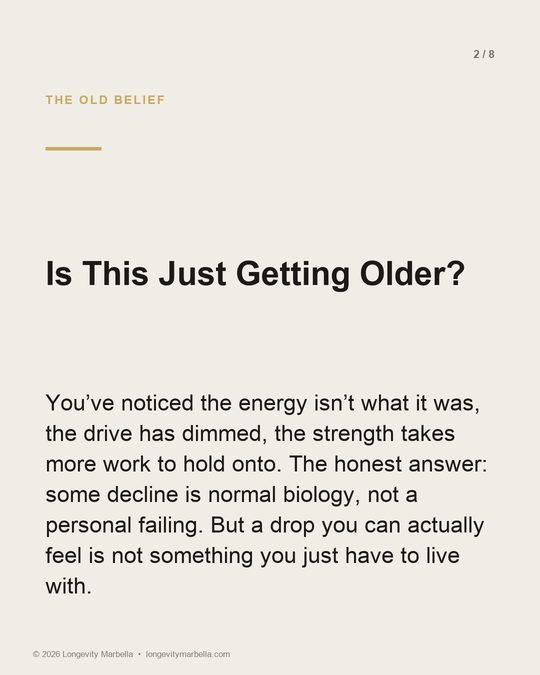
You have noticed it. The energy is not what it was, the drive has dimmed, the strength takes more work to hold onto. And somewhere in the back of your mind is the question every man eventually asks: is this just getting older, or is something actually off?
Not sure if this applies to you? One-minute check.
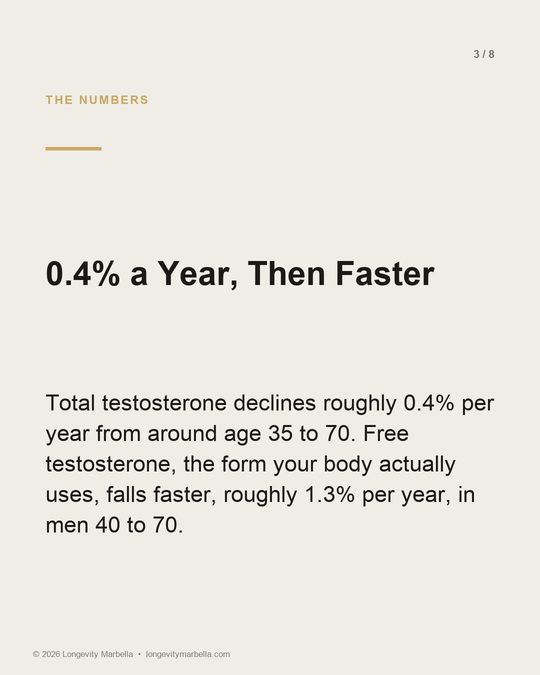
- Total testosterone declines roughly 0.4% per year from around age 35 to 70; free testosterone declines faster, roughly 1.3% per year.
- The decline traces to aging's effects on the HPG axis and, more directly, on the testosterone-producing Leydig cells in the testes.
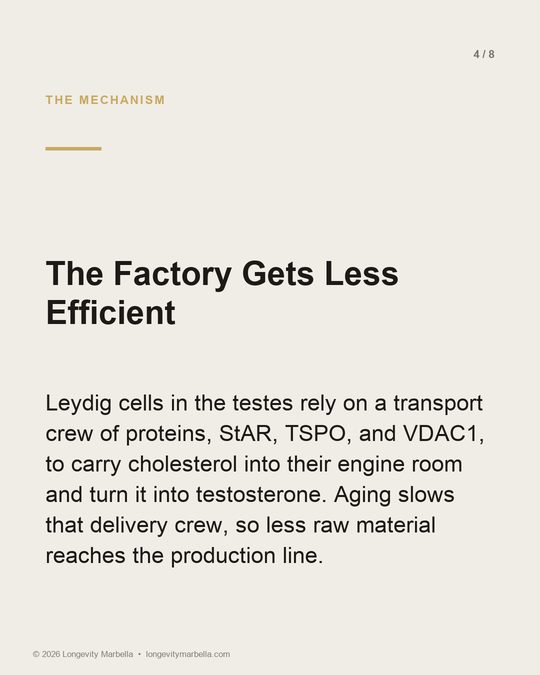
- At a cellular level, aging impairs the cholesterol-transport machinery (StAR, TSPO, VDAC1) that Leydig cells need to manufacture testosterone.
- Endoplasmic reticulum stress and reduced autophagy are also implicated in Leydig cell aging, though much of this comes from animal-model research so far.
- Exercise and weight management are the two evidence-based levers, exercise's effect can be partly transient, and weight management works largely through reducing testosterone-to-estrogen conversion; medication is a specialist-guided, case-by-case option, not a first-line fix.
Here is the honest answer. Some decline is normal. Testosterone does drift down slowly with age, and that is biology, not a personal failing. But a meaningful, symptomatic drop, the kind you can feel, is not something you simply have to accept as your lot. It can be measured, understood, and in many cases addressed.
This article explains the "why", the actual biology of what happens inside the body as testosterone falls, grounded in the evidence and honest about what is still uncertain. If you are further along and weighing treatment, our companion articles on whether testosterone therapy is safe and on why the specialist managing your care matters cover that ground.
The quick version
- Testosterone does decline slowly with age, roughly 0.4% per year in total, and faster in the "free" form your body actually uses.
- The reason is largely mechanical: the testosterone-producing cells in the testes get less efficient at turning cholesterol into hormone.
- That slow drift is normal. But a symptomatic drop, the kind that dulls energy, drive, and strength, is not something you just have to live with.
- Two levers are proven to help without treatment: regular exercise and losing excess body fat.
- Whether the decline is worth treating is a real, answerable question, and it starts with getting your levels properly checked.
Want to find out where you actually stand? A simple assessment can tell you whether this is normal aging or something worth acting on.
Message us on WhatsAppHow does testosterone normally work?
Your brain and your testes run a constant feedback loop, and testosterone is the output.
The system is called the hypothalamic-pituitary-gonadal (HPG) axis, in effect a factory's ordering chain. The brain is head office and signals the pituitary gland, the plant manager, to release two hormones, LH and FSH. Those orders tell the Leydig cells in the testes, the factory floor, to make testosterone, and head office adjusts the orders continuously based on how much is already circulating, like a manager watching stock. As men age, both the ordering chain and the factory floor can slow down.
So is it just getting older, or is something breaking?
Both, honestly. The drift is real and normal, but the machinery genuinely does get less efficient.
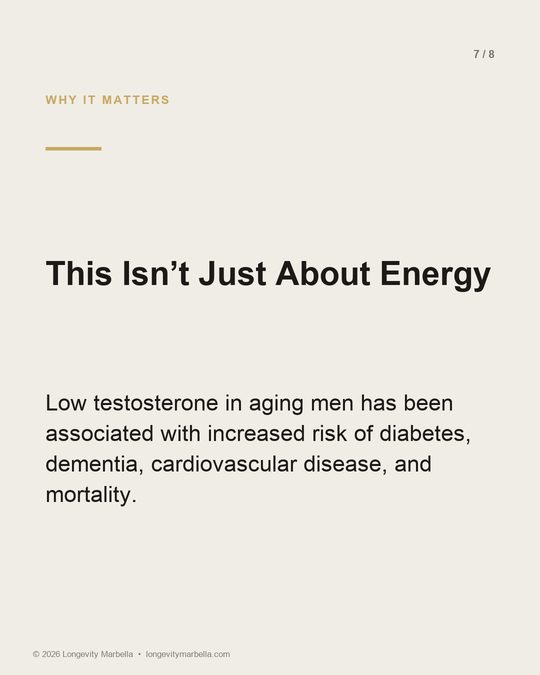
According to a 2024 review in Reproductive Biology and Endocrinology, total serum testosterone declines at roughly 0.4% per year in men aged 40 to 70, beginning gradually from around age 35. Free testosterone, the portion actually available for your body to use rather than locked to carrier proteins in the blood, falls faster, at roughly 1.3% per year, more than three times as quickly. This matters: low testosterone in aging men has been associated with increased risk of diabetes, dementia, cardiovascular disease, and mortality, and it can adversely affect fertility.
The decline traces back to aging's effect on the HPG axis and, more directly, on the Leydig cells, the testosterone-producing cells in the testes. Two mechanisms are worth understanding:
- The factory gets less efficient. Picture each Leydig cell as a tiny factory that turns cholesterol into testosterone. The raw material has to be carried into the factory's engine room (the mitochondria) by a crew of transport proteins (StAR, TSPO and VDAC1). With age, that delivery crew slows, so less raw material reaches the production line, even when the brain is still ordering more.
- The machinery gets gummed up. Cellular stress can jam a key production enzyme; in mouse studies, that stress cut testosterone output, and blocking it restored production. That is animal evidence, a plausible mechanism, not a proven human treatment. Separately, the cell's cleanup-and-recycling process (autophagy) slows too, leaving more damaged parts behind. This last piece is newer and less certain, so we flag it rather than lean on it.
In plain terms: with age the testis gets less efficient at its basic job, on top of any slowdown in the brain-to-testes signaling higher up.
What actually helps, without jumping to treatment?
Two levers are backed by evidence: regular exercise and losing excess body fat.
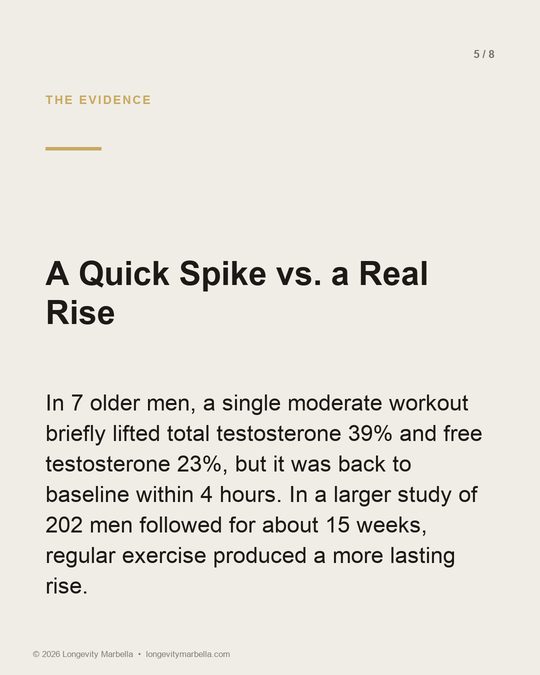
Exercise helps, with an honest caveat. Think of a single workout as an espresso shot for testosterone: real, but short-lived. In one very small study of 7 older men (average age 70), short bursts of moderate exercise briefly lifted total testosterone by 39% and free testosterone by 23%, but levels were back to baseline within 4 hours. With only 7 men, treat that as a hint, not proof. The long game is more interesting: a larger study of 202 men (average age 52) followed for about 15 weeks found a more lasting rise with regular exercise. Put that next to the well-established payoff of roughly 150 minutes of moderate activity a week, and regular training, especially lifting and resistance work, appears to support healthier testosterone over time, even if better trials are still needed.
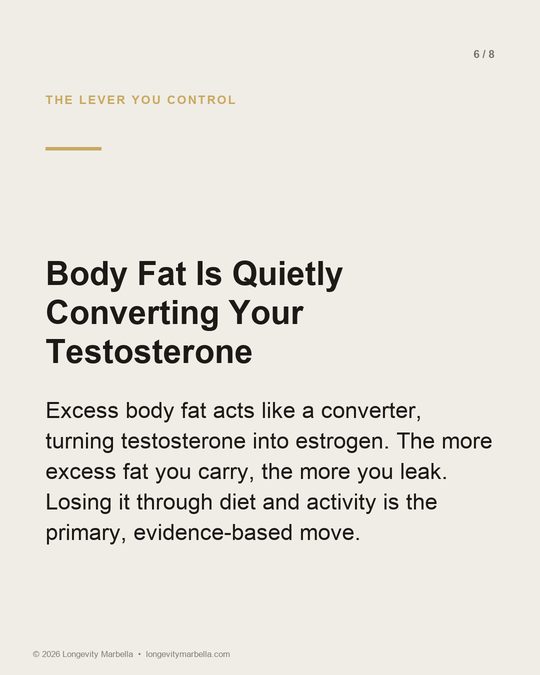
Losing excess body fat is the biggest lever you control. Body fat acts like a quiet converter that turns some of your testosterone into estrogen (aromatization), so the more excess fat you carry, the more you leak. Shedding it through diet and activity is the primary, evidence-based move for men whose decline is compounded by weight: close the leak and you keep more of what you make. There is also a medication angle, in a randomized controlled trial an estrogen-modulating drug used off-label raised testosterone after 12 weeks in men with obesity-related decline, but that is not a first-line move. The studies are limited, the long-term trade-offs unclear, and it is a case-by-case call for a specialist, not a blanket suggestion.
Neither lever replaces a proper evaluation. If you are feeling the symptoms and wondering whether the underlying decline is worth treating, that is a related question our articles on testosterone therapy safety and choosing the right specialist for TRT are built to answer.
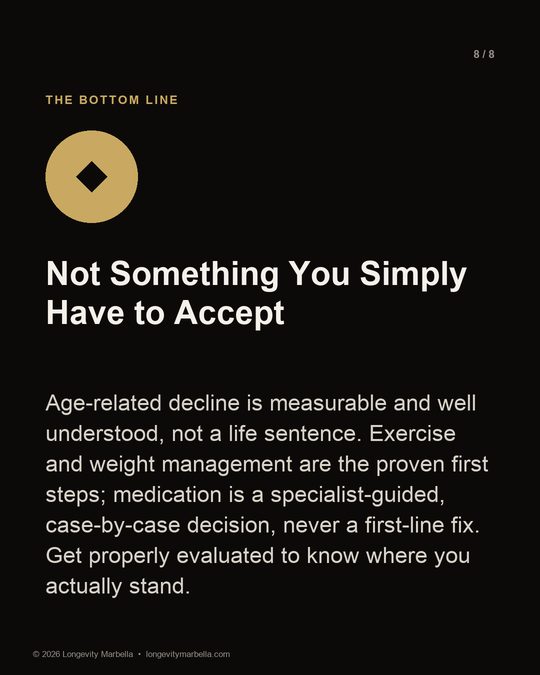
Here is the part worth holding onto: none of this is something you simply have to accept. Age-related decline is a measurable, well-understood process, not a life sentence. For the man who is genuinely feeling it, in his energy, drive, body, or mood, specialist-led care can offer an honest read of your biology, the levers worth pulling before any treatment, and, where it is warranted and safe, properly managed hormone optimization. The point is not to chase youth. It is to feel like yourself again, guided by someone who measures what is actually happening rather than guessing. You can see how we approach this in our men's health care.
If you are feeling the difference, you do not have to just accept it. Talk to our specialist about what is actually going on and what, if anything, is worth doing.
Message us on WhatsApp