


You feel flat. Tired in a way sleep does not fix, less interested in sex than you used to be, a bit foggy, and somehow not quite yourself. So you file it under stress, or a busy stretch, or just getting older.
Maybe. But those same everyday explanations are also exactly what low testosterone looks like. It rarely announces itself. It creeps in over months and years, one small change at a time, each one easy to shrug off on its own.
Here is the reassuring part, honestly told. These signs are recognizable, and once a simple blood test confirms what is going on, low testosterone is very treatable. You do not have to just live with feeling flat. This page walks you through what to actually look for, and what it can and cannot tell you on its own.
Not sure if this applies to you? One-minute check.
- The signs men notice first: lower sex drive, fewer or weaker morning erections, persistent fatigue, low mood or irritability, and lost drive, strength, and focus.
- These changes come on slowly, which is why they get blamed on stress, age, or a busy life for years.
- The same symptoms overlap heavily with poor sleep, stress, depression, and thyroid problems, so they are not specific on their own.
- That is why symptoms alone cannot diagnose it. A proper diagnosis needs both the symptoms and a confirmed low morning blood level.
- The good news: when testing confirms it, low testosterone is very treatable. You do not have to settle for feeling flat.
The sexual signs
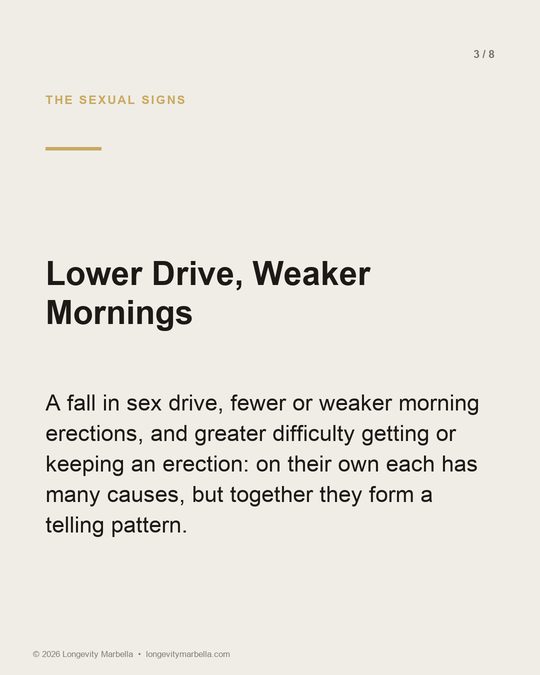
These are the changes many men notice first, because they are hard to ignore. The most common is a fall in sex drive (libido), meaning you simply think about and want sex less than you used to. Alongside it, men often report fewer or weaker morning erections, the ones that used to happen automatically on waking, and greater difficulty getting or keeping an erection.
On their own these have many causes, but together they are one of the more telling patterns.
The physical and energy signs
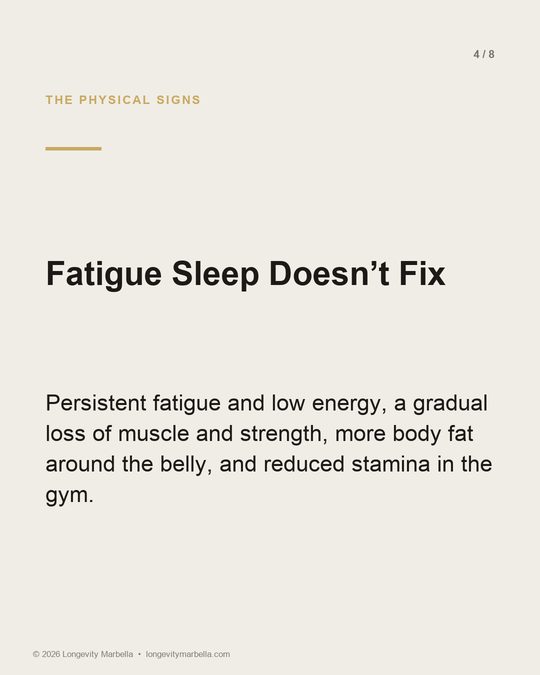
This cluster is about how your body performs day to day. The hallmark is persistent fatigue and low energy that a good night's sleep does not fix. Many men also notice:
- A gradual loss of muscle and strength, so the same training gives less back than it used to.
- More body fat, especially around the belly.
- Reduced stamina and slower recovery in the gym.
Because they build slowly, these are the signs most often written off as age alone.
The mood and mind signs
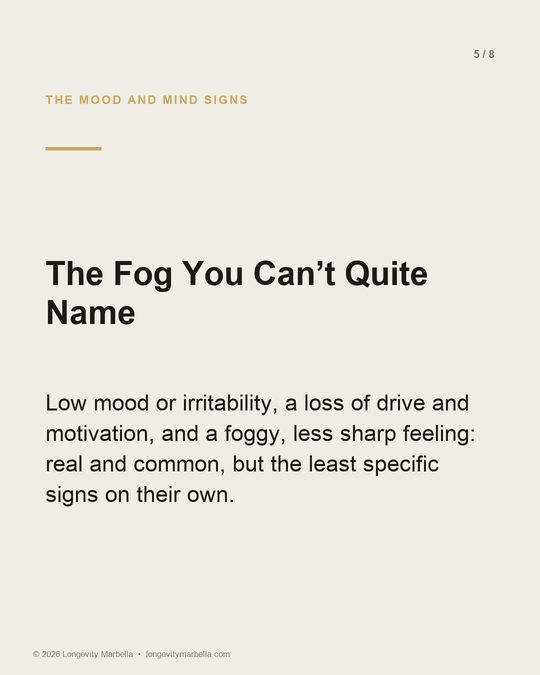
Testosterone influences how you feel and think, not just how your body works. Men with low levels often describe:
- Low mood or irritability, a shorter fuse than normal.
- A distinct loss of drive and motivation, a sense that the get-up-and-go has quietly gone.
- A foggy or less sharp feeling, sometimes called "brain fog", where concentration is not quite what it was.
These are real and common, but they also overlap most with stress and low mood from other causes, so they are the least specific on their own.
Other signs worth noticing
A few further changes round out the picture:
- Sleep that is poor or unrefreshing, so you wake feeling as though you barely rested.
- A broader drop in your general sense of wellbeing, feeling flat or "not yourself".
- In more severe cases, hot flashes, the sudden waves of heat more usually associated with menopause.
Any one of these is easy to dismiss, but taken with the clusters above they build a pattern worth taking seriously.
The honest part: symptoms alone are not a diagnosis
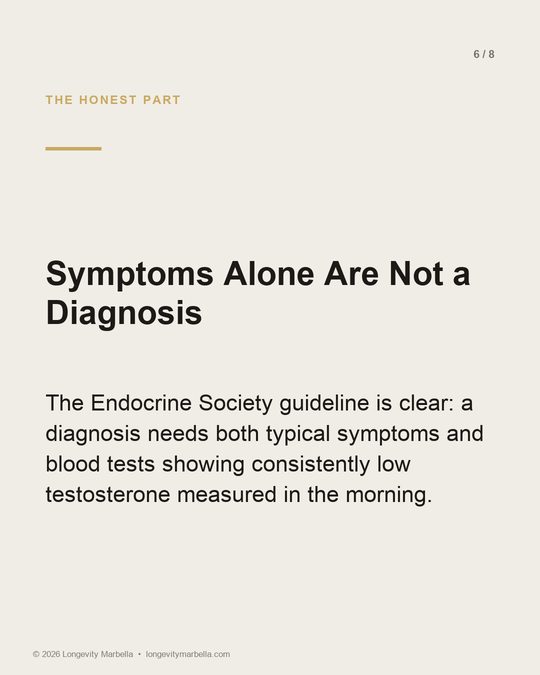
Symptoms alone are not enough to diagnose low testosterone. The Endocrine Society clinical practice guideline, published by Bhasin and colleagues in 2018 and indexed on PubMed, is clear that a diagnosis requires both typical symptoms and blood tests showing consistently low testosterone measured in the morning.1
The reason is simple. Every signal above, low libido, fatigue, low mood, poor concentration, weight gain, overlaps heavily with other very common problems: ongoing stress, poor sleep, depression, and an underactive thyroid. A man can have every symptom on this page and normal testosterone, and another can have low testosterone with only a few vague complaints.1
That overlap is exactly why guessing from symptoms is unreliable, and why a proper diagnosis anchors your symptoms to confirmed blood levels rather than to a feeling or an online checklist.
Recognize yourself in these signs? Find out if it is actually low T, with the right test read the right way.
Message us on WhatsAppIf several of these sound familiar
If you have read this far nodding along, the next step is proper testing, not self-diagnosis and not a home kit. In short, a correct assessment uses a fasting morning blood sample, confirms a low result on a repeat, and looks at free testosterone, the small active fraction that actually does the work, rather than a single total number in isolation.
We keep the how-to-test detail light here on purpose. Our companion article covers exactly what a correct panel involves, and how a diagnosis is confirmed and monitored: how low testosterone is properly diagnosed and monitored. That is the one to read next for the testing specifics.
Stop guessing and get checked. We will arrange the correct blood work and read your results honestly with you.
Message us on WhatsAppWho is at higher risk, and when to get checked
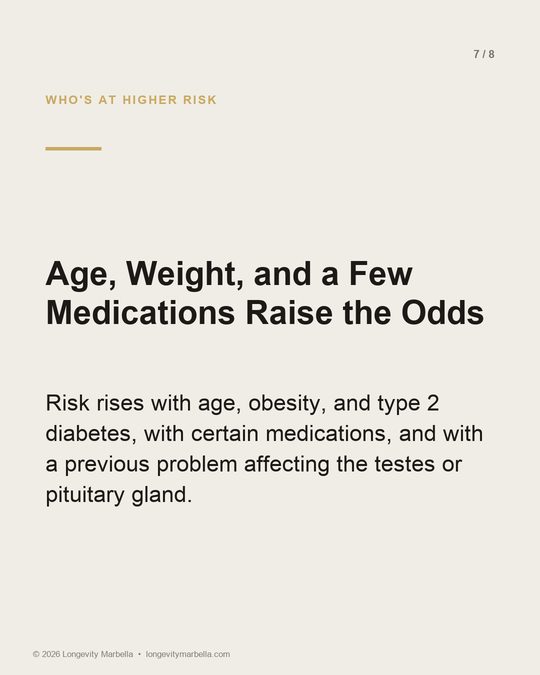
Some men are more likely than others to develop low testosterone. Risk rises with:
- Age, and with obesity and type 2 diabetes.
- Certain medications, including some painkillers and steroids.
- A previous problem affecting the testes or the pituitary gland, such as an injury or earlier treatment.
If you fall into one of these groups and several of the signs above ring true, that is a reasonable moment to get properly checked rather than wait and wonder. You may also find it useful to understand why testosterone declines with age, what a full men's health blood panel actually measures, and, if treatment ever came into the picture, whether testosterone therapy is safe.
- Low testosterone develops slowly, so its signs are easy to blame on stress, age, or a busy life.
- Sexual signs: lower sex drive, fewer or weaker morning erections, and erection difficulties.
- Physical signs: persistent fatigue, loss of muscle and strength, more belly fat, and reduced gym stamina.
- Mood and mind: low mood or irritability, loss of drive, and a foggy, less sharp feeling.
- Symptoms alone cannot diagnose it. The Endocrine Society guideline requires both typical symptoms and confirmed low morning blood levels, because these signs overlap with stress, poor sleep, depression, and thyroid problems.
- If several signs sound familiar, the next step is proper testing, covered in our diagnosis article, not a home kit.