


You have probably wondered if these injections actually work, or if they are just the latest hype. And even if they do work, you want to know they are safe, that the side effects will not floor you, and that the weight will not come racing back the moment you stop.
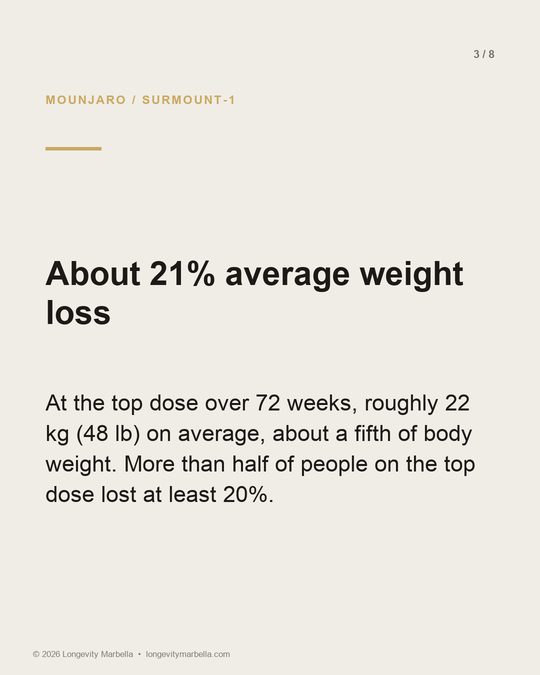

- Mounjaro: about 21% average weight loss at the top dose over 72 weeks (roughly a fifth of body weight).
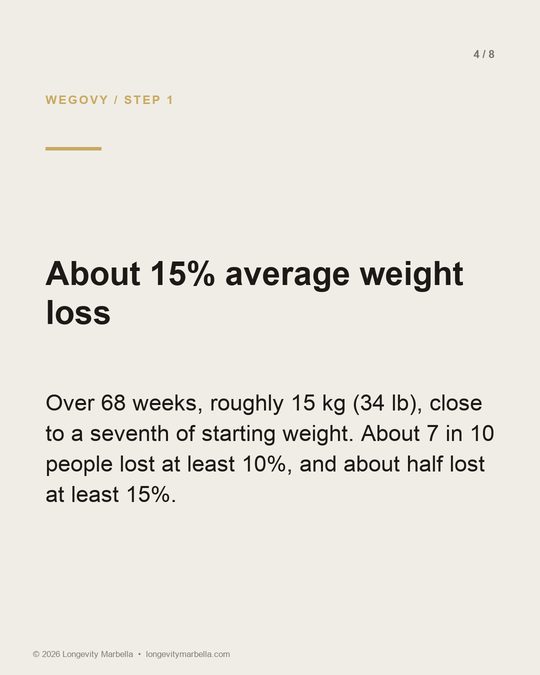
- Wegovy: about 15% average weight loss over 68 weeks (close to a seventh).
- Both improved blood pressure, blood sugar, and waist size.
- Wegovy also cut major heart events by about 20% (roughly a fifth fewer).
- Main side effects are stomach related and usually ease after dose increases.
- They are prescription medicines for a chronic condition, best used with medical guidance.
Those are the right questions to ask. So here is the honest answer up front. In large trials these medicines worked, and worked well. Their side effects are well understood and, for most people, manageable. And yes, weight can return if treatment stops without a plan, but that is exactly what proper medical supervision is for.
Let us walk through what the evidence actually shows, in plain English, so you can decide with clear eyes.
- They genuinely work: about 21% average weight loss on Mounjaro, about 15% on Wegovy, in their main trials.
- Wegovy also cut major heart events by about 20% in high risk adults, a first for a weight loss medicine.
- They are safe when properly supervised, with serious problems broadly similar to placebo in large trials.
- Side effects are mostly stomach related and usually manageable, especially when the dose is raised slowly.
- Muscle can be protected, and a maintenance plan is how you keep the weight off after you reach your goal.
Want a supervised plan built around your health, not a one-size-fits-all dose?
Message us on WhatsAppWhat are Mounjaro and Wegovy?
Both are weekly injections that work with your body's own appetite hormones. They reduce hunger, help you feel full sooner, and slow digestion, using the same gut-hormone pathways your body relies on after a meal to curb appetite and steady blood sugar. They are not stimulants and not fat burners.
The one key difference:
- Mounjaro (tirzepatide) acts on two gut hormones (GIP and GLP-1).
- Wegovy (semaglutide) acts on one of them (GLP-1).
The takeaway: both quiet your appetite at the hormonal level, and Mounjaro's two-hormone design is part of why it tends to produce slightly larger average weight loss.
Do they actually work? How much weight you can expect to lose
Yes, and the numbers are unusually large for a weight loss medication. Here is what the two landmark trials found.
Mounjaro (SURMOUNT-1): about 2,500 adults with obesity and no diabetes, followed for 72 weeks. Average weight loss by dose:
- Lowest dose: about 15% (roughly a seventh of body weight)
- Middle dose: about 19.5% (close to a fifth)
- Top dose: about 21% (roughly 22 kg, or 48 lb, on average, about a fifth of body weight)
Most people lost at least 15% of their body weight, and more than half on the top dose lost at least 20%.
Wegovy (STEP 1): about 2,000 adults with obesity, followed for 68 weeks.
- Average weight loss: about 15% (roughly 15 kg, or 34 lb, close to a seventh of starting weight)
- About 7 in 10 people lost at least 10% of their weight
- About half lost at least 15%
The takeaway: these are not hype numbers. STEP 1 set the modern standard, and Mounjaro pushed it higher.
It is not just the number on the scale
Both medicines did more than shrink the scale. In their trials they also improved blood pressure, blood sugar, and waist size.
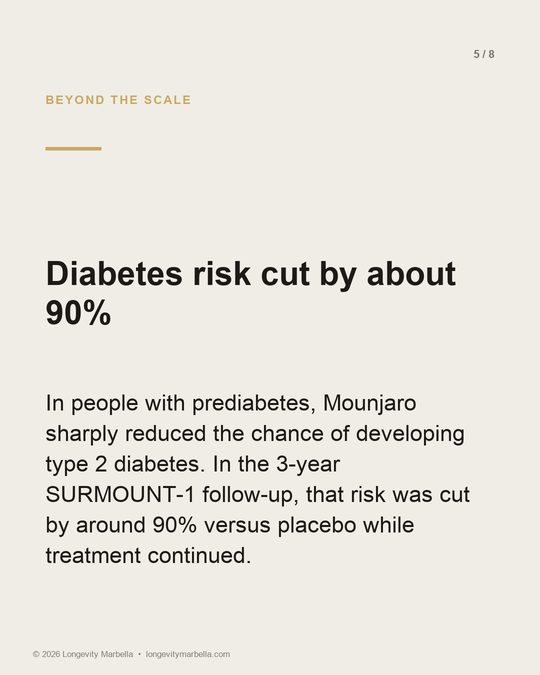
The standout finding: in people with prediabetes (blood sugar higher than normal but not yet in the diabetes range), Mounjaro sharply reduced the chance of developing type 2 diabetes. In the 3-year SURMOUNT-1 follow-up, that risk was cut by around 90% versus placebo while treatment continued.
The takeaway: this moves these medicines out of cosmetic territory and into genuine disease prevention.
Do they protect your heart?
Wegovy has a unique advantage here. A large trial called SELECT followed 17,604 adults with heart disease and excess weight but no diabetes, for about three years, to ask a bigger question than weight: does it protect the heart? It did.
- Major heart events (heart attacks, strokes, and heart-related deaths combined) happened in 6.5% of the Wegovy group versus 8.0% on placebo, about a 20% reduction.
- Deaths from any cause were about 19% lower.
- Blood pressure fell by about 3.3 mmHg, and a key inflammation marker (high-sensitivity CRP) dropped sharply.
That made Wegovy the first weight-management medicine approved specifically to reduce heart risk. Being straight about the detail: heart-related death on its own did not quite reach statistical significance, meaning the trial could not rule out chance for that single outcome, so the headline benefit comes from the combined events, not any single one in isolation. And the benefit appeared early, before people had lost most of their weight, which suggests protection comes not only from the kilograms lost but from what happens when excess, inflamed fat comes down.
One honest limitation: everyone in SELECT already had established heart disease, so the trial proves benefit for people already at high risk (what doctors call secondary prevention), not for someone who carries excess weight but has a healthy heart. Mounjaro's own large heart-outcome study is still ongoing.
The takeaway: for high risk hearts, Wegovy does something no weight loss drug had done before.
Are they safe? What the side effects really look like
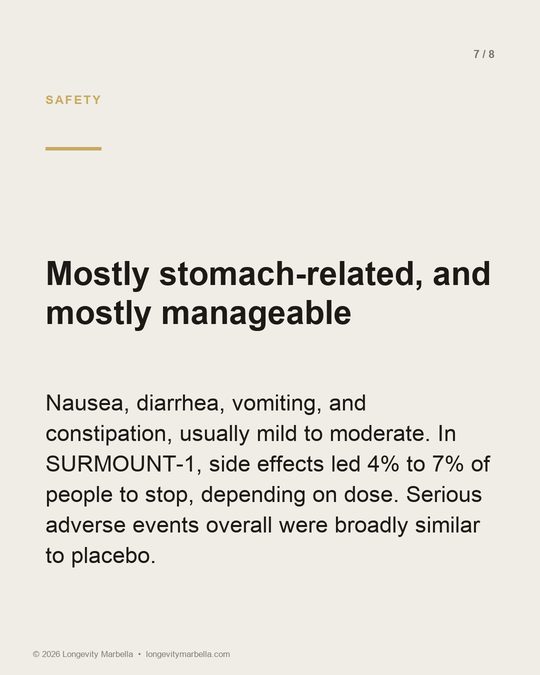
This is the question most people really want answered, so here is the honest version. The most common side effects for both are stomach related: nausea, diarrhea, vomiting, and constipation. For most people these are mild to moderate, they show up mainly while the dose is being slowly raised, and then they settle.
A smaller number of people stop because of these effects. In SURMOUNT-1, side effects of any kind led 4% to 7% of people on tirzepatide to stop, depending on dose (roughly 1 in 25 to 1 in 14). That is exactly why the dose is started low and raised gradually, and why these medicines belong under medical supervision rather than bought and self dosed. Reassuringly, in the big trials the overall rate of serious adverse events was broadly similar to placebo.
Some people should not take them at all, which is what pre-prescription screening is for:
- Both carry a boxed warning in the United States because, in rodent studies, this class caused thyroid C-cell tumors. They are not recommended for anyone with a personal or family history of medullary thyroid carcinoma or multiple endocrine neoplasia type 2.
- Less commonly, GLP-1 medicines have been linked to gallbladder problems and, rarely, pancreatitis, so any severe or persistent abdominal pain should be assessed promptly.
The takeaway: the side effects are known and mostly manageable, and the serious risks are screened for before you ever start. That is the whole point of supervised care.
Nervous about side effects? Safe, monitored care means slow titration and someone to call.
Message us on WhatsAppMounjaro vs Wegovy: which is right for you?
It is tempting to crown a winner, but that is the wrong question:
- Mounjaro tends to produce the larger average weight loss in trials.
- Wegovy has the proven heart protection data, and is approved for it.
- Both improve blood pressure, blood sugar, and waist size.
The takeaway: the right choice depends on your health, your other conditions, what you tolerate, availability, and your doctor's judgment, not on a single headline percentage. Our article on GLP-1 Weight Loss and Muscle Loss looks at how to protect muscle while the weight comes off.
What about retatrutide, the next generation?
There is a next-generation option on the horizon. Retatrutide works on three hormone pathways at once, rather than the one (Wegovy) or two (Mounjaro) of today's medicines, and in trials so far it has produced the strongest weight-loss results reported in this class. But it is not available yet: it is still in late-stage (phase 3) trials, the full peer-reviewed data are pending, and it is not approved, so it is not yet approved and cannot be prescribed anywhere today. When it does arrive, the right approach is to adopt it on the data, not the hype. We break it down in Retatrutide vs Mounjaro vs Wegovy.
Will the weight come back when I stop?
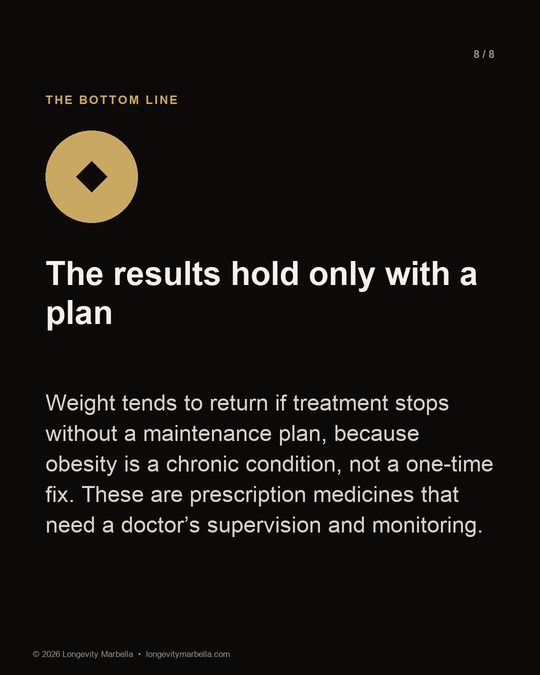
Here is the honest answer to the worry that holds most people back. Yes, weight tends to return if treatment stops without a plan, because obesity is a chronic, relapsing condition, not a one-time fix. That is not a flaw in the medicine any more than blood pressure rising again when you stop a blood pressure pill. It simply means the plan matters as much as the drug. Two realities:
- They work best as part of long term care, alongside nutrition, activity, and follow up.
- Keeping the weight off is about a maintenance plan, sometimes a lower ongoing dose, and protecting the muscle you keep, not willpower alone.
The takeaway: used properly and with a doctor's guidance, these medicines represent a real shift in what medical weight loss can achieve, and a plan is how you hold on to the results.
Worried about regaining? Let us build you a plan for keeping the weight off, not just losing it.
Message us on WhatsApp