

Gain muscle. Lose fat. Find the hidden cardiovascular risk.
Most places will sell you a body composition scan. This is the only assessment on the coast that measures how much muscle you have, how good it is, where your dangerous fat sits, and what your body can actually do, and then treats what it finds.

Your report
Every assessment ends in a document like this one. Yours to keep, and the thing the next measurement is laid against. The sample below is built on constructed figures, not a patient.
Open the sample report as a PDF.
Why three instruments, and not one
The literature is consistent that no single measurement carries the answer. Mass matters: a 2023 systematic review and meta-analysis found low skeletal muscle mass index associated with higher all-cause mortality, with a pooled relative risk of 1.57. Function matters more: in the Health, Aging and Body Composition cohort it was strength, and not muscle mass, that tracked with mortality. Quality explains the gap between the two, because muscle infiltrated with fat and fibrous tissue performs differently from muscle that is not. And the strongest risk stratification in the published work comes from reading mass together with function rather than either alone.
So we measure all of it.
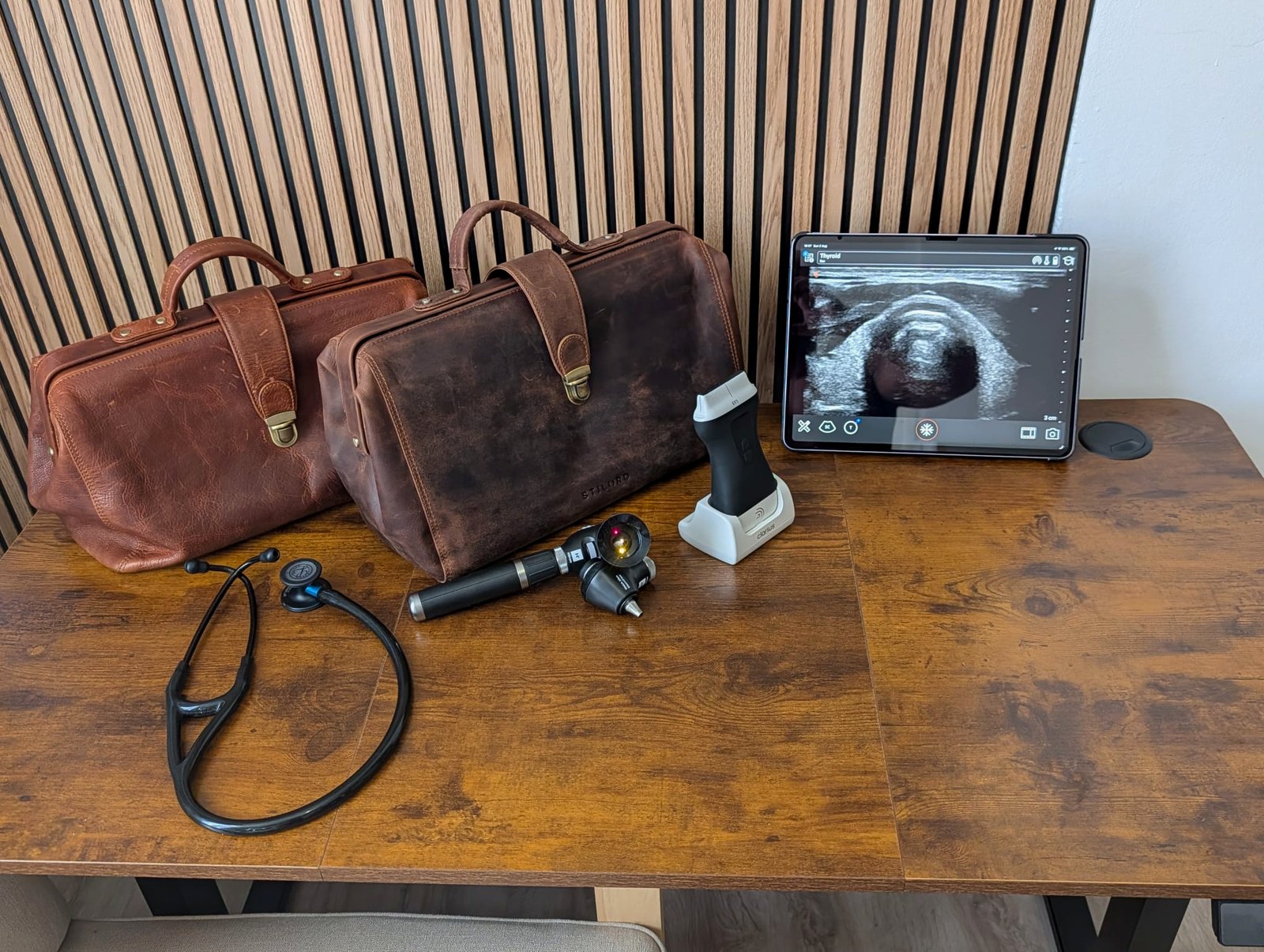
InBody 380: what you have
Multi-frequency segmental bioimpedance. Skeletal muscle mass, fat mass, and the balance between them, measured limb by limb and trunk separately rather than as one number for the whole body. That segmental read is what exposes asymmetry, and what shows whether a leg is losing muscle while an arm is not. It also gives a visceral fat estimate, run under standardized conditions rather than whenever you happen to step on a gym scale, because hydration, food and training in the hours beforehand all move the result and almost nobody controls for that.
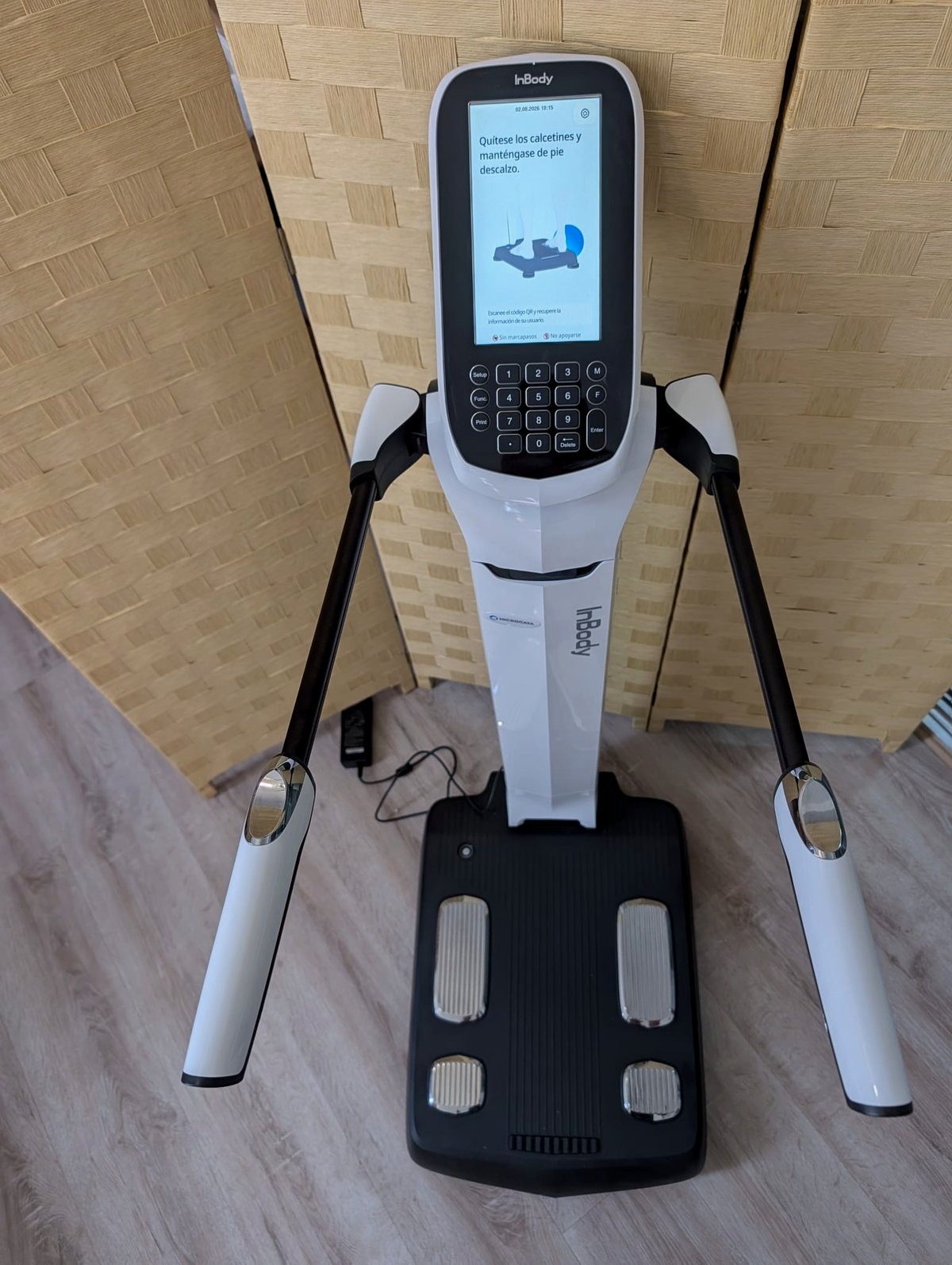
Muscle ultrasound: how good it is
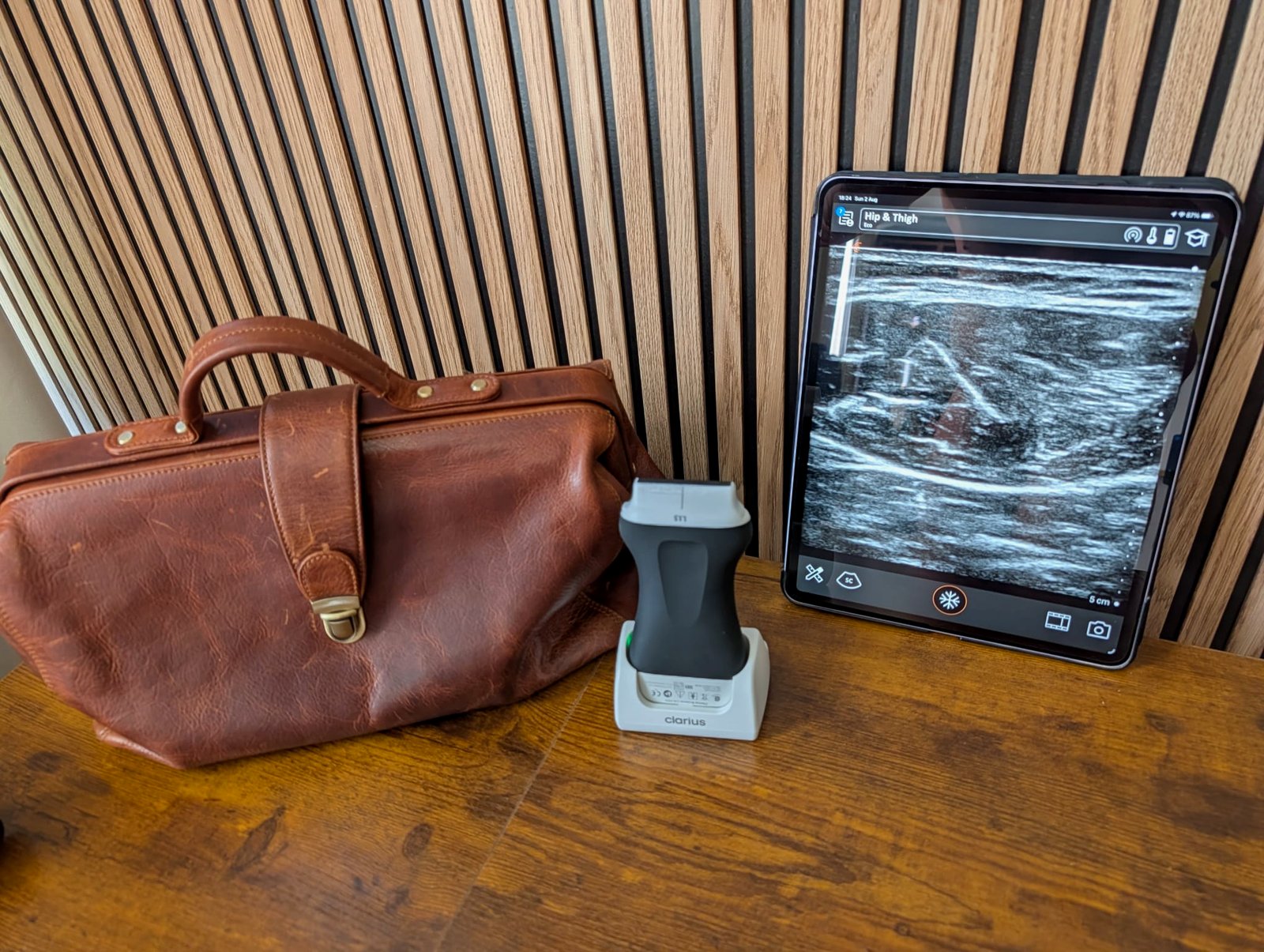
Bioimpedance cannot see inside the tissue. Ultrasound can: thickness, architecture, and the echo intensity that rises as fat and fibrous tissue infiltrate the muscle. Read at the quadriceps, the muscle that lifts you out of a chair and carries you up a hill. Two men with an identical bioimpedance readout can have entirely different muscle, and this is the only instrument in the room that shows which is which.
A DXA scan can always be ordered in addition, to complete the information. It is the reference standard for bone density and for how fat and muscle are distributed across the whole body, ordered at an imaging center and read alongside everything measured here. It also gives you a fixed starting point. Repeat it later and you see exactly what changed after a nutrition plan, a training block or a medical protocol, instead of guessing from the scale.
Muscle quality and quantity, graded together: your armor for older age.
This matters because of what the evidence actually says. Strength and quality, not size alone, are the more informative predictors of survival and functional ageing. A patient with moderate muscle mass but poor function can carry more risk than one with less impressive numbers and preserved performance.
The scale is a poor instrument
A man can hold the same number on the scale for five years while muscle quietly leaves and fat quietly arrives, and every morning that number reassures him.

The modern weight loss medicines make this urgent rather than academic. They work, and they work extremely well, and what comes off is not only fat. Lean tissue goes with it, and a man can lose twenty kilograms, be delighted with the mirror, and have quietly dismantled the muscle that was going to carry him through his seventies.
Lose fat and keep muscle: done by professionals, this is a solved problem. Maximizing fat loss while retaining muscle is a skill: protein set to your own body and not a magazine number, resistance training built to protect lean tissue during a deficit, the pace of loss controlled rather than raced, the endocrine picture corrected underneath it, and the muscle actually measured before, during and after so the plan is adjusted on evidence instead of hope. That is the difference between losing weight and improving your body composition, and they are not the same outcome.
If you are taking one of these medicines and nobody is measuring your muscle, nobody is supervising your treatment. They are supervising the scale.
Visceral fat: the one you cannot see
Weight, BMI and the mirror all measure the fat you can see. The fat that matters most sits deeper, packed around the organs, and it behaves less like storage and more like an organ in its own right, releasing free fatty acids, inflammatory signals and adipokines that drive insulin resistance, atherogenic cholesterol patterns and endothelial damage. The Lancet Diabetes and Endocrinology position statement, and the American Heart Association scientific statement on obesity and cardiovascular disease, both make the same point: abdominal visceral fat carries cardiovascular risk independently of BMI.
Two men, the same age, the same height, the same number on the scale. One carries his fat under the skin. The other carries it inside, around the liver and the gut. Their body weight is identical and their cardiovascular risk is not.

The BMI is acceptable. The clothes fit. Nothing about the reflection raises a question. And the risk profile underneath it is not acceptable at all. It gives you nothing to react to either: visceral fat does not hurt, does not show, and does not announce itself. For a large number of people the first unmistakable symptom of the process it drives is the cardiac event itself.
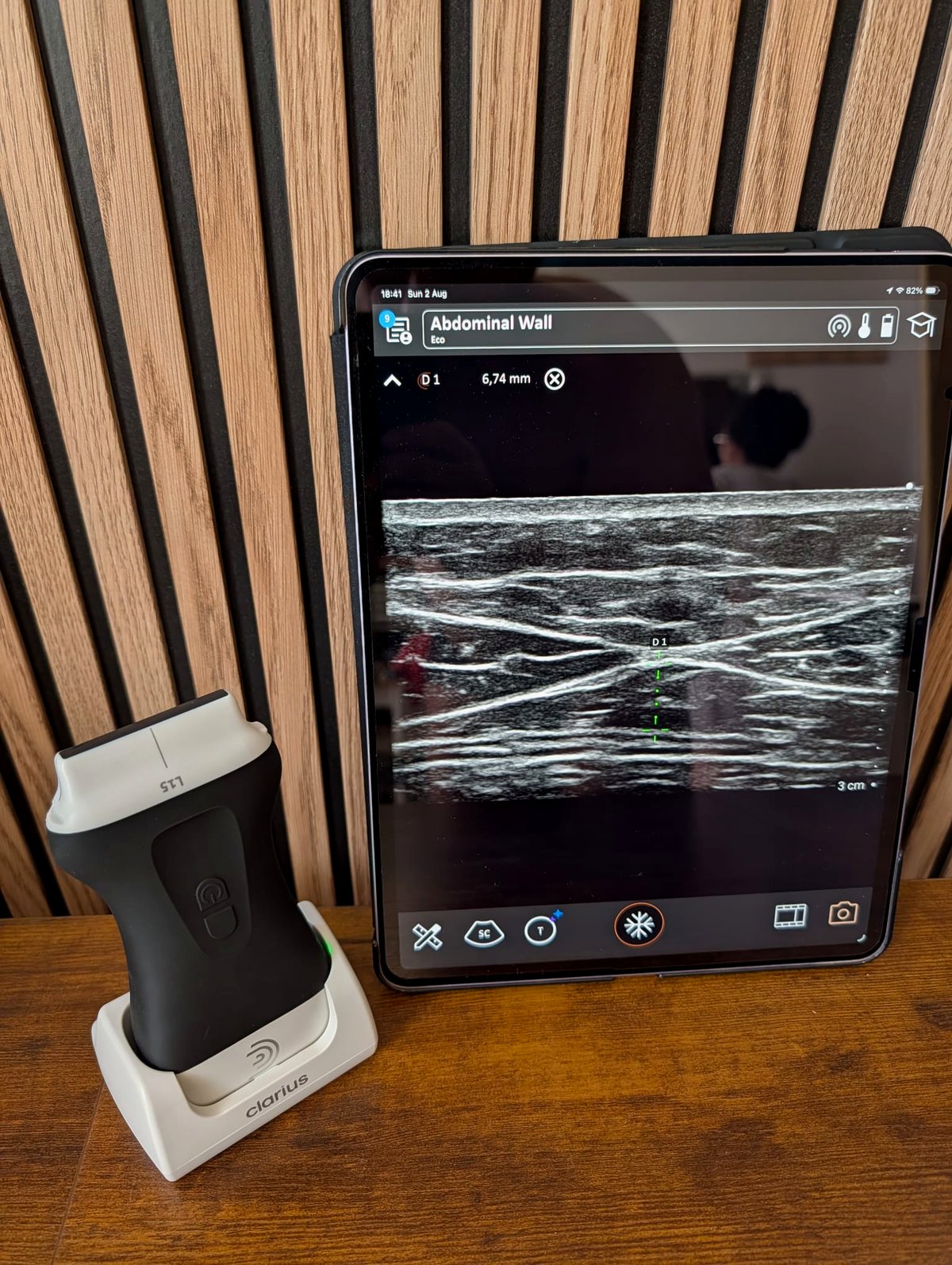
All of it is visible, at your own table. The ultrasound looks through the abdominal wall and measures the fat directly, in millimeters, with no radiation and nothing sent away. CT and MRI remain the reference standard for quantifying visceral fat, and both mean a hospital, an appointment and a wait. This gives you the answer in the room.
And unlike ten years ago, an unfavorable answer is a workable one. Nutrition and training shift visceral fat preferentially, and the medicines have moved a long way. In the SELECT trial, semaglutide 2.4 mg weekly reduced major adverse cardiovascular events by 20% in people with overweight or obesity and established cardiovascular disease who did not have diabetes, alongside a waist reduction of close to 8 cm. In SURPASS-CVOT, tirzepatide was non-inferior to an established comparator for major cardiovascular events in type 2 diabetes with cardiovascular disease, with 16% lower all-cause mortality and substantially greater weight loss. Which of these is appropriate, if any, is a decision that belongs to a consultation and not to a website.
A word about the drug everyone is asking for
There is a third agent, retatrutide, that is genuinely promising, with roughly 28% average weight loss reported in its Phase 3 obesity program. It is also not approved. Not in Europe, not in the United States, not anywhere. It remains investigational, its regulatory filing is expected around the end of 2026, and a decision is unlikely before late 2027.
That gap between the headlines and the pharmacy is precisely where the grey market lives. What is being sold online today under that name is not the drug from those trials. It is unlicensed material of unverified identity, purity, dose and sterility, from suppliers who answer to nobody, injected by people with no monitoring of any kind. There is no way for you to know what is in the vial and no recourse when it is wrong.
If retatrutide is approved, and it may well be, this practice will discuss it with you properly, on evidence, when it legally exists. Until then the honest medical advice is the unglamorous one: do not buy it.
And function, because the literature demands it
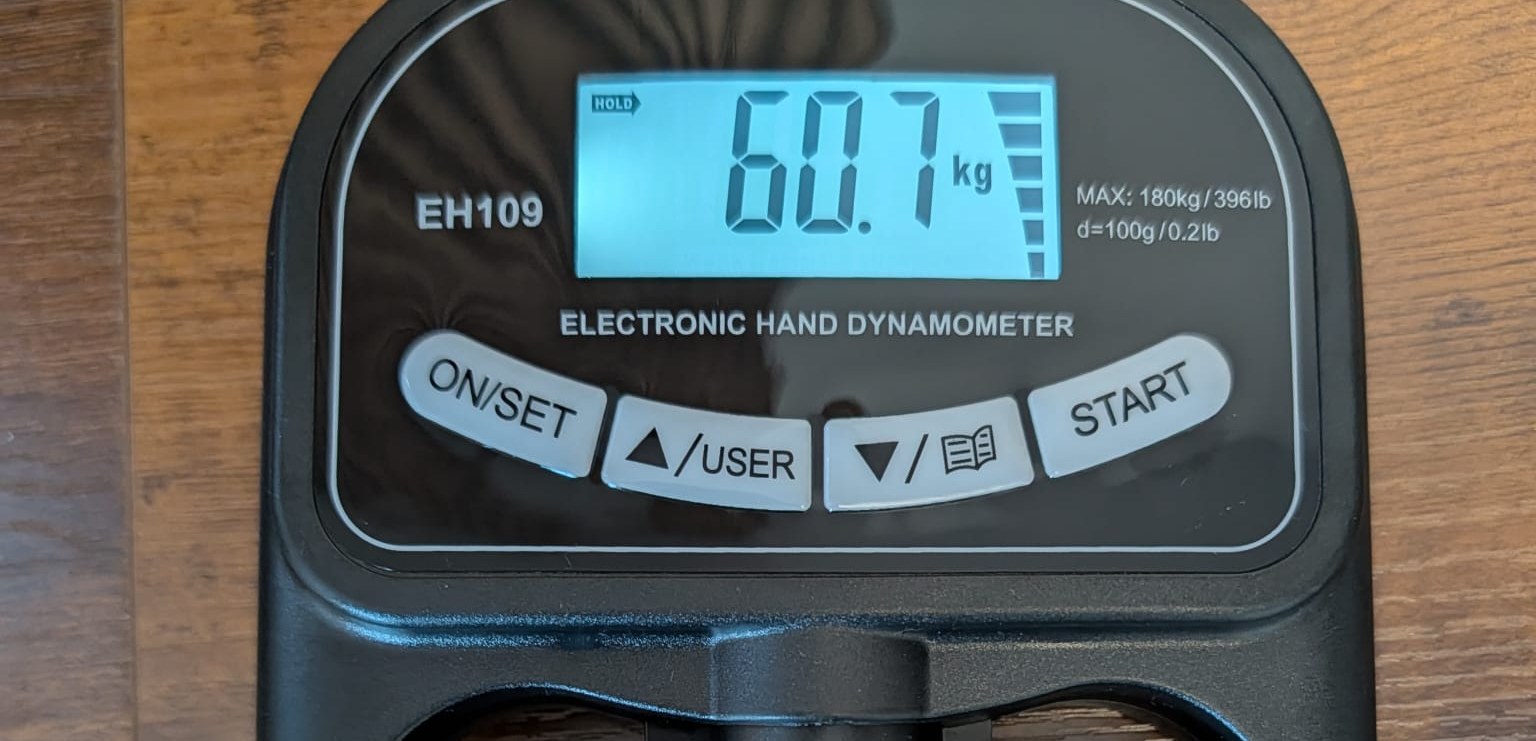
Grip strength, gait speed, and rising from a chair. The measures that predict most. Grip is measured with a calibrated hand dynamometer, to protocol, the way the cohort studies measured it, so your number can stand next to the published ones and next to your own reading at the next assessment. Repeated over time, the trajectory becomes the finding.


When a scan is not the tool
- When a symptom needs a doctor first. Unexplained weight loss, a new swelling, pain: those get a proper consultation before any instrument, because an assessment is not a substitute for a diagnosis.
- When the whole-body reference standard is the better answer: for bone density and full-body distribution, DXA is ordered at an imaging center and read alongside everything measured here.
- When it is too soon to remeasure. Body composition changes on the scale of months, not days, so repeat measurements are scheduled where the trajectory can actually show, matched to your training block, your treatment or your program.
That honesty is part of the product: the assessment exists to answer your question, and when a different tool answers it better, that is what gets recommended.
Then it is treated, and measured again
Resistance training aimed specifically at preserving and rebuilding muscle. Protein and nutrition set against your own numbers rather than a generic target. Correction of the endocrine causes when they are there, because thyroid disease, cortisol excess, low testosterone and insulin resistance all attack muscle before they touch the scale, and that is precisely the specialty reading your results. And where the medicines are appropriate, they are used with the muscle measured before, during and after, which is how they should have been used from the beginning.


Then it is all measured again, so you are watching numbers move rather than hoping.
The reassessment is a product, not a suggestion. The first measurement is a baseline; its value compounds at the second one, when change has a number instead of an impression. The reassessment belongs at three or six months, and the comparison is where treatment decisions actually live: keep, adjust, or stop. Book the second measurement when you book the first; a date on the calendar turns an intention into a deadline.


Who reads it
A double board-certified specialist in Internal Medicine and Endocrinology. Muscle and visceral fat are not adjacent interests here. They are the middle of the specialty.

Where it happens
The complete assessment happens in clinic, because the InBody 380 is a clinical instrument and does not travel. The ultrasound examinations and the function tests can also be performed at your residence anywhere on the Costa del Sol. English and Dutch spoken.
5.0 on Google from 21 reviews
“Best Endocrinologist for weight loss and improved body composition.”
Lianne Nicole Muller, Google review
“Best sports endocrinologist in town”
Joel Amador, Google review
Unedited Google reviews from the verified profile I manage. A selection is shown here; all twenty-one are on Google, including the ones in other languages.
Send me a WhatsApp
The fastest route. Your message comes straight to me and I reply personally, usually the same day.
WhatsApp the specialistPrefer not to message? Use the form.
Request your consultation
About Body Composition Assessment. Tell me briefly what you need and how to reach you. Your enquiry comes straight to me, in confidence, and I reply personally.
Frequently Asked Questions
What does the Body Composition Assessment actually measure?
Four things in one visit: skeletal muscle mass and fat mass on the InBody 380, segmental, limb by limb; muscle quality on quadriceps ultrasound, thickness, architecture and echo intensity; visceral fat measured directly through the abdominal wall, in millimeters; and function, grip strength by calibrated dynamometer to protocol, sit to stand, and gait speed. You leave with a written report.
Why three instruments instead of one scan?
No single measurement carries the answer. Low skeletal muscle mass index is associated with higher all-cause mortality, with a pooled relative risk of 1.57 in a 2023 meta-analysis, but in the Health, Aging and Body Composition cohort it was strength, not mass, that tracked with mortality, and muscle quality explains the gap between the two. So mass, quality, deep fat and function are read together.
Can a DXA scan be included?
Yes, on request. DXA is the reference standard for bone density and for how fat and muscle are distributed across the whole body. It is ordered at an imaging center and read alongside everything measured here, and it gives you a fixed starting point to repeat later.
My weight is normal. Why would visceral fat concern me?
Abdominal visceral fat carries cardiovascular risk independently of BMI, and there is a name for the version that catches people out: normal-weight obesity. It does not hurt, does not show, and does not announce itself, and the ultrasound measures it directly, with no radiation.
Who performs the assessment?
Dr Francis de Windt, MD, double board certified in Spain in Internal Medicine and Endocrinology, colegiado 292911860, with a Master's degree in morphofunctional assessment from Universidad de Malaga. The ultrasound is performed and read by him, in the room, and what the assessment finds is then treated and measured again.
How often should the assessment be repeated?
On the scale your body actually changes: typically after a training block, a treatment phase or a program milestone, so the trajectory is real rather than noise. Your report is the baseline the next measurement is laid against, and the interval is set with you.
I am on Wegovy, Mounjaro or another weight loss medicine. Is this for me?
Especially then. These medicines take lean tissue along with the fat, and the muscle should be measured before, during and after treatment so the plan protects it. If nobody is measuring your muscle, nobody is supervising your treatment; they are supervising the scale.
Do I need a referral?
No. This is a private, direct-access practice: you book, you are measured, and the results are explained by the specialist in the room. Where onward imaging such as DXA is useful, it is arranged for you.
Do I need to prepare?
For the bioimpedance measurement, avoid heavy meals, alcohol and hard training beforehand and come normally hydrated, because all of those move the result. You will be told exactly what to do when the appointment is arranged.
Is the ultrasound uncomfortable?
No. It is a probe, gel and a screen. There is no radiation, no contrast, no needle and nothing sent away to a laboratory.
What do I leave with?
An explanation you understand, a structured written report of what was measured and what it means, and where further investigation or treatment is warranted, exactly what and why.
What does it cost?
Costs are discussed transparently after your consultation, with no obligation.
References. Newman AB et al. Strength, but not muscle mass, is associated with mortality in the Health, Aging and Body Composition Study cohort. J Gerontol A Biol Sci Med Sci. 2006;61(1):72 to 77. McGregor RA et al. It is not just muscle mass. Longev Healthspan. 2014;3:9. Wang Y et al. Low skeletal muscle mass index and all-cause mortality risk in adults. PLoS One. 2023;18(6):e0286745. Wu M et al. Associations of muscle mass, strength, and quality with all-cause mortality in China. Chin Med J. 2022;135(11):1358 to 1368. Strasser B et al. Role of dietary protein and muscular fitness on longevity and aging. Aging Dis. 2018;9(1):119 to 132. Neeland IJ et al. Visceral and ectopic fat, atherosclerosis, and cardiometabolic disease. Lancet Diabetes Endocrinol. 2019;7(9):715 to 725. Powell-Wiley TM et al. Obesity and cardiovascular disease: a scientific statement from the American Heart Association. Circulation. 2021;143(21). Cesaro A et al. Visceral adipose tissue and residual cardiovascular risk. Front Cardiovasc Med. 2023;10:1187735. Kahles F et al. GLP-1 and the cardiovascular system. J Clin Invest. 2026;136(4):e194748. Jastreboff AM et al. Triple-hormone-receptor agonist retatrutide for obesity, a phase 2 trial. N Engl J Med. 2023;389:514 to 526.
This page is for general information only and is not medical advice. All assessments and treatments require individual evaluation by a qualified doctor.
Measure it, then act on it
The Body Composition Assessment, in clinic on the Costa del Sol, read by the specialist who performed it.
Book the Assessment